Product Care


Product Care


Caring for your diamond jewelry

We know how much thought, love, and care has gone into purchasing the perfect piece for your loved one. We ensure that our quality standards live up to your expectations. All our jewels are made with high-quality, enduring materials. From precious metals to chains and clasps, we make sure that everything matches to perfection so the products can be worn every day, forever.

However, it is always a good idea to know how to make sure your favorite jewelry can become a legacy product- and keeps looking brand new even after years!


14 Kt Gold

Being the least reactive metal, solid gold doesn’t get oxidized or changes color. The 14k gold used by us gives our jewelry a rich, but non-blingy hue. 14k gold is sturdier than 18k gold and is ideal for everyday wear and some times rough, usage.

Caring for your gold jewelry- Even the strongest of us can do with some TLC from time to time- gently scrubbing with a light toothbrush and some warm water will keep your gold jewelry shine through a lifetime!



Sterling Silver

925 Sterling silver is made of 92.5% pure silver and 7.5% copper. To give our silver jewelry durability and extra shine, we plate it with Rhodium, one of the rarest and therefore, the costliest precious metals on earth.

Caring for your silver jewelry

Sterling Silver jewelry needs only one thing- You! The oils in our skin prevent silver from oxidizing faster. The more often you wear your silver, the better! When you are not in the mood, keep your piece in the special Caratlab care pouch to keep oxygen at bay

Avoid direct contact with water- Sterling silver oxidizes over time. Remember to avoid water when you are wearing.


Diamonds

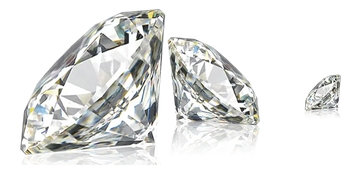
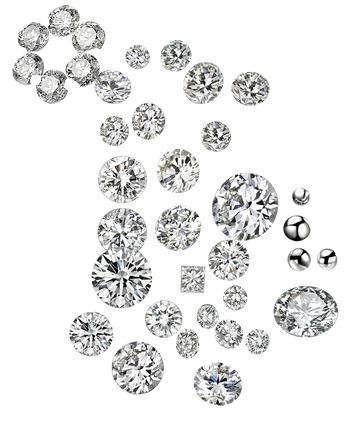
Diamonds are called “a girl’s best friend” for nothing! One of the hardest substances known to us, diamonds have the potential to be your BFF. Our high-quality lab-created diamonds are conflict-free and made with environmentally responsible practices.

Caring for your diamonds

To ensure your diamonds last forever new, rinse the stone and setting thoroughly with water after gently scrubbing it with a toothbrush and some warm, soapy water. But never with silver jewelry!.

Protect your diamonds from sharp blows and other metals to avoid small fractures and chips.


It’s an All Around Win

What are  Lab-Grown Diamonds?


The lab grown diamond phenomenon offers structurally and chemically identical diamonds to that of mined diamonds, and gives peace of mind to buyers. As a consumer, you can rest assure that you are getting the best carat to the value proposition, possible.


Lab grown diamonds take the guess-work out of determining whether you are buying the best diamonds for your money, or not. Not only does it make the diamond buying process easier, but it also makes the curating process easier, enabling us to provide the most high quality & economical jewelry products on the market.

The Evolution of Lab-Created Diamonds

Although lab grown diamonds have now become readily available in the mass consumer market, lab grown diamonds have been in use since the early 1990s, and have been dated back to the nineteenth century.

Lab-grown diamond success has impacted industrial growth effecting major end-use segments like construction and electronics. These diamonds can be used in cutting, drilling, polishing and have excellent thermal and electrical properties and can be used as conductors. The list of solutions lab grown diamonds offer creates a better choice for the world over.

With enhancements in technology, scientists have learned how to create high-quality consumer focused diamonds, at a fraction of the cost.

Celebrity endorsements of lab grown diamonds has also increased attention to the new process. High-profile associations (e.g. Leonardo DiCaprio) have legitimized lab-grown diamonds as credible and worthy of recognition in the marketplace. Visible famous ambassadors generate publicity in the entertainment, fashion and business press accelerating pure grown diamond acceptance as jewelry options.

What’s the Difference Between  a Lab-Made Diamond and a Mined Diamond?


Nothing. From a value perspective, the difference is enormous. It’s a no-brainer for a consumer to want the same product for less monetary costs as well as a host of other ethical or social costs. From a chemical perspective, lab grown diamonds have the exact same chemical composition to that of a mined diamond.

Chemical Composition of Lab-Grown Diamonds and Mined Diamonds

The process of mining diamonds is labor intensive, exceedingly more expensive and exceptionally time-consuming. The process of producing lab grown diamonds has become increasingly less expensive and fractionally less laborious and time-consuming.

Lab-Grown Diamond Market

The market size for lab-grown diamonds is rising in all facets. The growth is happening organically with little organized marketing. One of the mined diamond market’s largest recent obstacles has been catering to the millennial consumer. 


Millennial attitude toward social responsiveness is astronomical. Not only is their desire for humanitarian abuse to be completely eradicated but their awareness of abuse is accessible at the click of a mouse. Supply and demand for mined diamonds remain unstable causing retailers to embrace the new method of producing a quality product. 


The positives that favor lab-grown diamonds far outweigh any negatives making it easier to sell.

How is a Lab-Grown Diamond Made?

The entire growing process requires an incredibly controlled environment and every diamond must complete the entire growth cycle. Labs use pressure and temperature to dissolve ground carbon into a diamond seed and then layering that seed with carbon and sealing it into a vacuum chamber produces a new stone over just a few short weeks.

The chemical, optical and physical properties are exactly the same as those mined from the earth without taking billions of years from pressure from the earth’s crust and volcanic activity to generate the specific crystal configuration called a diamond cubic. This process is mimicked in lab-gown diamonds to provide brilliant, ethical and cost-efficient diamonds.

Lab Diamond FAQ

Do lab diamonds sparkle rainbow? 

Can I grow diamonds at home? 

Will lab diamonds pass diamond tests? 

Are lab-grown diamonds a threat to the diamond industry? 

Are lab grown diamonds real? 

Are lab grown diamonds as beautiful as earth mined? 

Does Diamond Clarity affect sparkle? 

How to clean cloudy diamonds? 

What is a Cubic Zirconia? Does it look real? 

How does a diamond become cloudy? 

What are the four C's to diamond buying? 

Why do diamonds sparkle even in dim light? 

Are lab-diamonds heavy? 

Do man-made diamonds have color? 

Are lab-grown diamonds valueless? 

How expensive are lab grown diamonds?

What are the differences between VVS / VS /VS1 / VS2 diamonds? 

How rare is it to find VVS diamonds naturally? 

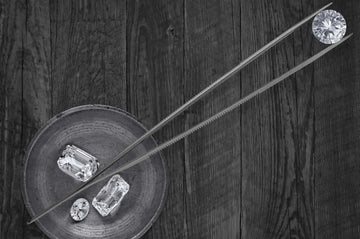
What do jewelers use to look at diamonds? 

Is the naked eye sufficient for appraising jewelry?

Why Should I Buy from The Carat Lab?